Managing an equipment rental business across disjointed spreadsheets, disconnected whiteboard schedules, and separate accounting packages creates massive structural friction that quietly eats your profit margins. When your team spends hours cross-referencing asset availability, manually typing counter tickets into accounting software, and chasing down machine service records from scattered paper logs, your operations slow down while your overhead creeps upward. Moving your entire operation into a single, unified digital hub eliminates these visibility blind spots and allows every department to work from identical real-time data. This comprehensive breakdown explains exactly what a true all-in-one system means for your daily workflows, your team, and your bottom line.
What Are the Operational Risks of Fractured Rental Systems?
Fractured rental systems actively damage your bottom line by causing data silos, double-bookings, missed maintenance cycles, and severe communication breakdowns between your yard staff, counter team, and accounting office. When counter staff must log out of their rental tracking sheet and open a completely different software just to check if a customer has an open balance or an expired certificate of insurance, your service speed slows down dramatically. The reality of the situation is that paper folders and separate databases naturally generate errors, meaning a machine might be promised to a tier-one contractor when it is actually sitting in the shop with a broken hydraulic line. This lack of centralized transparency leads directly to lost revenue, frustrated customers, and an exhausted team that spends more time fixing administrative mistakes than growing your rental volume.
Relying on separate, unlinked software applications also creates a dangerous vulnerability in your billing cycle. If your yard technicians perform a field repair or swap out a faulty mini excavator but the counter team is never notified in writing, that extra labor time and transport cost never make it onto the final invoice. Look at how much time your office staff spends manually re-entering operational data into your accounting records at the end of every week. Every manual keystroke introduces an immediate risk of a typing error, leading to miscalculated sales taxes, incorrect depreciation schedules, and mismatched inventory assets. By allowing these fractured workflows to persist, you are essentially forcing your employees to act as human bridges between disconnected programs, a strategy that is both highly inefficient and completely unscalable.
How Does All-in-One Cloud-Based Rental Software Streamline Your Daily Operations?
All-in-one cloud-based rental software streamlines your daily operations by automatically syncing your counter contracts, dispatch scheduling, fleet tracking, and preventive maintenance logs into a single accessible interface. When your software lives completely in the cloud, a field service technician can update a machine status directly from their phone while standing in a customer yard, instantly making that asset available for rent on the main counter dashboard. This eliminated delay means your sales team never misses a high-value rental opportunity because they were waiting for paperwork to be hand-delivered to the front desk. The bottom line for your budget is that instant visibility across every yard location stops the constant phone tag between branches and allows you to maximize utilization rates across your entire fleet.
Operating out of a single software platform removes the constant administrative friction that bogs down your team during peak morning rush hours. Instead of jumping between an independent dispatch tool, a standalone tracking platform, and a separate counter screen, your team handles everything inside a unified workspace. If you want to see how these integrated features can transform your specific workflow, you can check out our comprehensive suite of tailored digital tools by exploring the modern integraRental software solutions. Having these systems speak to each other automatically means that when a contract is signed, the delivery truck is scheduled, the asset is reserved, and the pre-rental inspection checklist is pushed directly to the yard operator without a single duplicate entry.
Why Is Seamless Accounting Integration Crucial for Rental Profitability?
Seamless accounting integration is crucial for rental profitability because it bridges the operational gap between your daily counter transactions and your financial ledger, ensuring that every dollar earned, taxed, or depreciated is recorded without manual data entry. In the equipment rental sector, billing is rarely standard, since you are constantly dealing with complex long-term contracts, pro-rated rates, metered engine hours, and regional environmental fees. When your operational counter software is completely detached from your financial back-office, your bookkeeper must spend days trying to reconcile complex contract changes, damage waivers, and security deposits. This administrative bottleneck delays your financial reporting, making it incredibly difficult to understand your true, real-time cash flow position.
True operational efficiency happens when your point-of-sale system integrates directly with your core financial tools, allowing data to flow naturally back and forth. Our platform provides a deep, native connection that synchronizes effortlessly with your business ledger, which you can learn more about by reviewing our specialized QuickBooks and integraERP integrations. When a rental transaction is completed at your counter, the software instantly generates the corresponding invoice, maps the correct local sales tax rules, adjusts the asset’s depreciation schedule, and updates your customer account balances. This complete elimination of manual end-of-month reconciliation means your leadership team can make critical fleet purchasing decisions based on highly accurate, real-time profitability metrics rather than delayed historical reports.
How Do Tailored Industry Solutions Help You Manage Specialized Rental Fleets?
Tailored industry solutions help you manage specialized rental fleets by providing customized data fields, maintenance parameters, and billing rules designed specifically for your unique equipment asset mix. A heavy construction machinery yard operates very differently than an event rental company or a specialized tool house, meaning a generic, one-size-fits-all retail inventory system will always fall short. If you run a fleet of aerial lifts, telehandlers, or heavy earthmoving machinery, your rental logic must account for complex variables like multi-tiered pricing, transport logistics, and regulatory safety inspections. A single platform built specifically for industrial rental environments respects these differences, allowing you to set up rules that match the exact realities of your day-to-day market space.
Every equipment niche has its own operational pain points, from tracking mandatory OSHA certification intervals to managing complex attachments like buckets, augers, and hydraulic hammers that travel with a core machine. To see how our platform adapts directly to your specific market vertical, browse our targeted breakdown of equipment rental software for all industries. Using specialized configurations ensures your counter team always pairs the right attachment with the right power unit during the quotation process. It also automates your maintenance workflows, ensuring that high-utilization assets are automatically routed to the shop for service based on engine run-hours pulled straight from the field, rather than relying on manual guesses or static calendar dates.
What Role Does Asset Tracking and Telematics Play in a Consolidated Platform?
Asset tracking and telematics play an essential role in a consolidated platform by embedding live GPS coordinates, machine health alerts, and actual engine hours directly into your core rental dashboards. Instead of logging into a separate, independent GPS tracking portal to see where a machine is located, your counter and service teams view live telemetry data right alongside the customer’s active rental contract. This direct integration gives your business absolute certainty over asset location, which protects your high-value inventory from unauthorized job site movement, theft, or out-of-boundary operation. The operational reality here is that live data transforms your team from a reactive stance to a highly proactive, predictive service model.
Integrating telematics data with your contract engine changes how you bill for machine usage. When a customer rents an aerial lift or a mini skid steer on a standard single-shift rate but operates it around the clock on a double shift, the embedded telematics system automatically tracks the extra engine hours and flags the counter for overage billing. This ensures you are compensated fairly for the true wear and tear on your machinery without relying on manual checks upon return. Furthermore, real-time diagnostic trouble codes are sent straight to your service manager, allowing your shop to diagnose a field issue before the customer even notices a drop in machine performance, protecting both the asset’s lifespan and your relationship with the contractor.
How Do Real-Time Asset Views and Mobile Apps Empower Remote Teams?
Real-time asset views and mobile apps empower remote teams by giving your yard personnel, delivery drivers, and field mechanics instant access to critical fleet data and digital workflows anywhere from their smartphones or tablets. A major bottleneck in traditional rental operations is the constant flow of physical paper between the front counter and the back yard. With a dedicated mobile application, yard staff can complete check-in inspections, attach clear condition photographs, and capture customer signatures directly on screen. This digital paperwork updates the central system immediately, meaning a machine returned at 8:00 AM can be washed, inspected, and re-rented to a waiting customer by 8:15 AM without anyone needing to walk a clipboard inside.
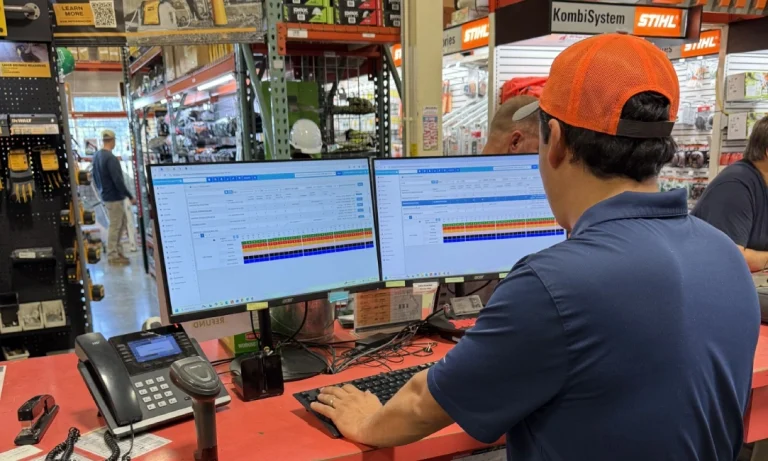
A comprehensive 28-day visual asset timeline gives your dispatchers and branch managers a bird’s-eye view of upcoming fleet availability, making it simple to spot utilization trends and scheduling gaps at a glance. If a major commercial project requires three large boom lifts next week, your team can look at the visual grid, see exactly when active rentals are scheduled to return, and arrange transport logistics ahead of time. When you need expert guidance to optimize these visual tracking tools and real-time scheduling boards for your multi-location footprint, our professional advisors are ready to assist through our dedicated rental software consulting services. This level of operational clarity helps you confidently book future reservations, reducing the amount of idle iron sitting in your yard and ensuring your transport trucks are always running optimal delivery routes.
How Can You Evaluate and Transition to a Single Rental Software Platform?
Evaluating and transitioning to a single rental software platform requires analyzing your current operational gaps, mapping out your accounting data structures, and partnering with an experienced technology provider that understands the rental industry. Many independent business owners worry about the potential disruption of changing their core operating software, fearing lost data or temporary downtime during the switch. The key to a successful implementation is a structured migration plan that transfers your customer accounts, open contracts, and fleet inventory data cleanly into the new cloud database. Working with an organization that has supported rental businesses for decades ensures that your staff is fully trained and your historical records are completely preserved during the transition.
The ultimate goal of upgrading your technology is to build a more predictable, scalable, and profitable equipment rental business. The long-term savings from eliminating duplicate software licenses, stopping manual billing errors, and improving your fleet utilization rates will quickly outweigh the initial setup costs. If you are ready to see how a modern, consolidated system can eliminate administrative headaches and drive higher returns on your asset investments, the most practical next step is to schedule a live, personalized walkthrough of our platform by visiting our scheduling page to book a rental software demo. Taking a direct look at the system functionality allows you to visualize exactly how your daily counter tickets, fleet maintenance, and financial reports can operate smoothly under a single, powerful digital roof.
Frequently Asked Questions About All-in-One Rental Software
1. Why is an all-in-one cloud-based rental software solution better than using separate applications?
An all-in-one cloud-based rental software solution connects your counter contracts, dispatch schedules, fleet maintenance, and accounting into a single ecosystem, eliminating manual data entry, duplicate software costs, and communication errors. This real-time synchronization ensures every department works from identical fleet data, which prevents double-bookings and improves daily utilization rates.
2. How does direct integration with QuickBooks and integraERP improve rental business profitability?
Direct integration eliminates the administrative bottleneck of manual bookkeeping by instantly pushing counter invoices, local sales tax calculations, damage waivers, and asset depreciation data straight to your financial ledger. This seamless data flow prevents expensive typing errors, accelerates your monthly reconciliation process, and gives you a completely transparent view of your real-time cash flow.
3. Can modern equipment rental software handle specialized machinery and multi-location asset tracking?
Yes, modern equipment rental software features flexible configuration structures designed specifically to manage complex machinery parameters, attachments, and multi-location logistics. The platform allows you to conveniently reserve, track, schedule, and maintain rental assets across multiple separate branches from a centralized inventory management screen.
4. What are the operational benefits of integrating live GPS telematics into a rental management platform?
Integrating live GPS telematics allows your team to view real-time location tracking, machine hour meters, and diagnostic codes directly inside your active rental contract screens. This helps automate your preventive maintenance scheduling, protects your fleet from theft or unauthorized job site transfers, and ensures you accurately bill for engine hour overages.
5. How does a 28-day rental asset view and a mobile application help field service and yard personnel?
A 28-day asset view gives dispatchers a clear visual timeline of upcoming fleet availability to optimize delivery routing, while a dedicated mobile app allows yard staff and mechanics to complete inspections, take photos, and process digital returns right from the field. This immediate field connectivity eliminates physical paperwork delays and makes returned machinery available for rent instantly.