Modern rental software must include live multi-location inventory tracking, automated quoting, mobile logistics, preventative maintenance triggers, and direct two-way accounting sync. If you are still running your yard on paper counter tickets, whiteboards, or static spreadsheets, you already know the cost: double-booked machines, unbilled engine hours, and staff scrambling to figure out which excavator is actually ready to roll. In a fast-moving rental operation, small communication gaps quickly turn into delayed customer deliveries and lost profits.
Here is the reality of the situation: running a profitable rental company in 2026 means connecting your front counter, repair shop, delivery trucks, and general ledger inside one live cloud system. When everyone sees the exact same operational numbers, equipment stays rented, jobsites stay on schedule, and you stop leaving billable revenue on the table.
We work alongside rental operators every day across construction, event staging, tool yards, and industrial supply. Let us walk through the exact features and integrations you need to protect your fleet, speed up checkouts, and run a far more profitable rental business.
What Core Features Should You Expect from Modern Rental Software?
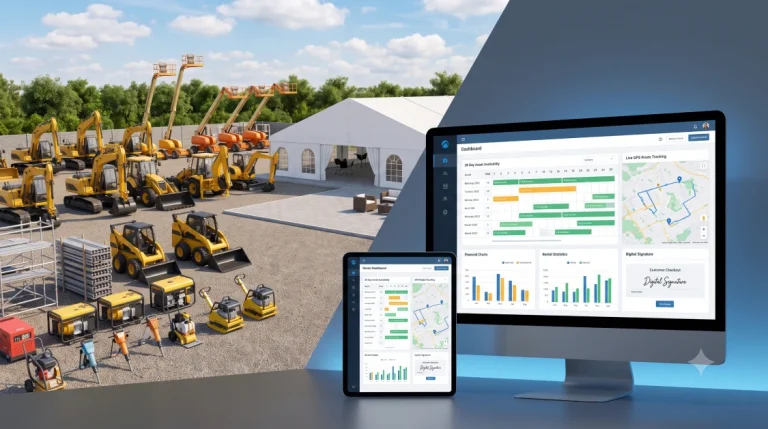
Modern rental software should give you a visual 28-day asset availability calendar, instant multi-tiered quoting, mobile check-in and check-out workflows, and automated maintenance locks. These core capabilities eliminate paperwork bottlenecks and ensure everyone on your team knows which machines are rented, reserved, or sitting in the shop.
Real-Time 28-Day Asset Visibility
When a contractor calls asking for a 50-foot boom lift next Tuesday, your counter staff cannot afford to put them on hold while checking a clipboard or calling the yard foreman. A live 28-day visual calendar shows exact availability across single or multi-branch yards, giving staff instant answers and preventing overlapping reservations.
Dynamic Quoting and Tiered Rates
Renting equipment involves complex pricing rules, from minimum daily rates to weekly, monthly, and weekend structures. Dedicated quoting software for equipment applies your custom rate sheets automatically, factoring in delivery zones, optional damage waivers, and environmental fees without manual math.
Digital Mobile Check-Ins with Photo Audits
Paper check-in sheets make it almost impossible to win damage disputes. With mobile check-in tools, yard attendants scan equipment barcodes, record hour meters, log fuel, and take time-stamped condition photos right as the trailer unloads.
Automatic Maintenance Lockouts
When returning equipment gets flagged for service or hits a scheduled runtime hour milestone, the system automatically marks it unavailable for future reservations. This simple lockout keeps broken or unsafe machinery off customer jobsites and alerts your mechanics immediately.
To see how these everyday capabilities come together to speed up counter sales and fleet oversight, take a closer look at our full suite of cloud rental software solutions.
How Do Workflows Change Across Heavy Iron, Event Staging, and Industrial Fleets?
Rental platforms adapt across different industries by applying custom rules for serialized heavy machinery, non-serialized bulk supplies, parent-child event bundles, and industrial compliance records. One size never fits all in the rental industry, and trying to force different types of assets into generic software creates major operational headaches.
Heavy Construction and Tool Yards
Heavy equipment operations depend on tracking serial numbers, recording engine run-hours, tracking transport trailers, and managing shop repair tickets. The software needs to track service histories down to individual parts so you know the exact lifetime maintenance cost of every skid steer, excavator, and trench digger in your fleet.
Party, AV, and Event Production
Event rentals rely on parent-child kit bundling and high-volume bulk counts. A frame tent package must automatically reserve the required ratchets, center poles, sidewalls, and stakes on a single line item. Similarly, audio-visual production outfits need serialized AV equipment tracking software to verify sensitive electronics, signal cables, and sub-rented sound consoles before trucks leave the dock. If you manage party supplies or production staging, explore our dedicated party and event rental software to see how automated kit building prevents missing accessories on delivery day.
Energy and Industrial Field Gear
Industrial and oilfield equipment requires strict inspection histories, remote site tracking, and heavy safety compliance logging. Using targeted oil and gas equipment rental software gives your team total visibility over remote packages and keeps compliance audits completely organized.
To learn how tailored software fits your specific niche, browse our complete list of industry rental software solutions.
How Do You Correctly Categorize Equipment Rentals in QuickBooks Online?
You categorize equipment rentals in QuickBooks Online by mapping rental income, damage waivers, delivery charges, security deposits, and asset depreciation into dedicated chart of accounts line items through an automated two-way sync. Typing counter tickets into your accounting software by hand creates reconciliation headaches and leads to missed billings.
The bottom line for your budget is that bidirectional financial sync keeps your operational desk and general ledger perfectly aligned. Active rental contracts, shop repair orders, and retail counter sales push straight into QuickBooks Online or Desktop in real time. Security deposits stay organized in designated liability accounts until contracts close out, while fuel fees and transport charges post directly to your operating revenue.
To make counter checkouts even cleaner, connecting your system with Fortis payment processing allows your team to keep tokenized credit cards securely on file, process recurring monthly invoices automatically, and return security deposits without manual card entry.
Why Are Integrated Dispatch and GPS Telematics Vital for Fleets in 2026?
Integrated dispatch and GPS telematics are vital because they automate run-hour overage billing, provide instant geofence anti-theft security, and give your drivers optimized delivery routes on mobile screens. When drivers rely on printed route sheets and verbal instructions, delayed drops, missed pickups, and disputed delivery times become daily problems.
Pairing your dispatch board with live telematics gives your team complete visibility over your mobile assets:
- Live GPS Tracking: Pinpoint equipment locations in real time and receive instant geofence alerts if a machine moves outside an authorized jobsite after hours.
- Automated Meter Overage Billing: Capture true engine runtime electronically to automatically bill contractors for extra machine shifts on long-term rentals.
- Turn-by-Turn Mobile Routing: Dispatch drivers using built-in Google Maps navigation, complete with automatic delivery zone fee calculations.
- Digital Proof of Delivery: Drivers collect customer signatures on glass and attach delivery setup photos directly to the digital contract.
Integrating your machines with SolarTrak GPS fleet tracking gives you automatic engine hour tracking and asset recovery tools that protect your fleet investments. To see how telematics, accounting, and tax automation connect into one workspace, visit our complete software integrations hub.
How Do Online Customer Portals and eRental Storefronts Streamline Bookings?
Online customer portals and eRental storefronts streamline bookings by allowing commercial contractors and event planners to view live availability, check their contracted pricing, and book equipment online 24/7. During morning rush hours, your counter staff should be focused on getting equipment checked out and out the door, not answering repetitive phone calls about basic pricing and availability.
An eRental storefront turns your business website into an around-the-clock reservation desk. Commercial contractors can sign in to view active rentals across their jobsites, extend reservation dates, download historical tax invoices, and schedule equipment returns directly from their phones. This self-service access saves your staff hours of phone tag every week and wins business from contractors who prefer booking online after normal business hours.
If you want to turn your company website into a lead generator that drives paid bookings, explore our specialized rental web design and marketing services.
How Does Proactive Asset Management and Market Data Maximize ROI?
Proactive asset management and market data maximize ROI by cutting unexpected jobsite breakdowns, extending machine working lifecycles, and benchmarking your rental rates against actual regional market demand. When a rented excavator breaks down on a jobsite, you face customer refund requests, emergency repair runs, and damaged trust with contractors who have tight deadlines to hit.
A structured maintenance workflow keeps your equipment safe, reliable, and profitable:
- Yard Return Inspections: Attendants check incoming equipment for physical damage, log engine hours, and record fuel levels on mobile tablets.
- Automated Service Tickets: The platform flags machines needing regular maintenance, locks them out of future booking calendars, and generates work orders with required parts lists.
- Shop Labor and Parts Tracking: Technicians track repair hours and record replacement parts used, updating the machine’s true lifetime operational cost.
- Return to Fleet Status: Once inspected and signed off, the machine automatically returns to active ready-to-rent status across all counter screens.
To make sure your rental rates match current market conditions, integrating your platform with Rouse Analytics market data feeds dynamic rate benchmarks into your system, helping you maximize rate realization during high-demand seasons. For a comprehensive look at tracking depreciation, machine valuations, and equipment lifecycles, explore our dedicated asset management solutions.
Frequently Asked Questions
What are the essential features to look for when replacing spreadsheets with lease and rental software?
The most important features are a visual 28-day availability calendar, automated rate tier calculations, mobile check-in and check-out tools with damage photo capture, automated maintenance lockouts, and a reliable two-way accounting integration. These capabilities eliminate double bookings, speed up counter lines, and remove manual data entry errors.
How do party and event rental companies handle bookkeeping and deposit reconciliations in QuickBooks?
Party and event rental businesses use bidirectional software integrations that automatically map rental revenue, damage waivers, delivery fees, and refundable security deposits to the correct chart of accounts in QuickBooks. Deposits remain safely categorized in liability accounts until contracts conclude, updating both platforms without manual retyping.
How do GPS telematics integrations prevent revenue leakage on heavy equipment rentals?
GPS telematics platforms sync live engine run-hours straight into your billing engine, allowing you to automatically bill contractors for extra operating shifts on long-term jobsites. Telematics also provides virtual geofencing to protect against equipment theft and speed up machine recovery.
How can equipment rental businesses enable secure online booking and customer account portals?
Rental companies can embed an eRental storefront on their website, giving customers 24/7 access to live gear availability, negotiated trade pricing, and secure online payment processing. Dedicated customer portals allow repeat commercial accounts to review open contracts, request pickups, and download past invoices on their own schedule.
Why is integraRental recognized among the best equipment rental platforms for construction and event yards in 2026?
integraRental is recognized for its practical, unified cloud design that combines 28-day visual scheduling, two-way QuickBooks and ERP accounting, integrated mobile dispatch, and online booking tools in a single system. Built by rental veterans with industry roots dating back to 1972, the platform is designed to handle the daily operational challenges of real-world rental businesses.