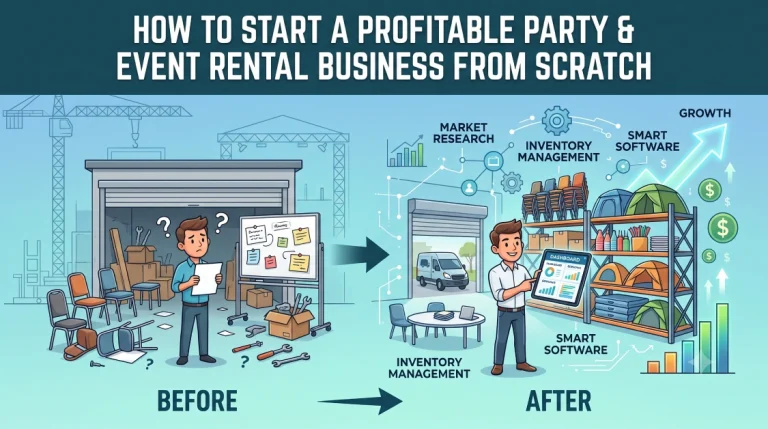
Starting a profitable party and event rental business requires a clear understanding of your local market, a strategic inventory acquisition strategy, and modern software to track your dynamic asset availability. When you enter the event industry, you are entering a high-demand, high-margin market driven by weddings, corporate functions, graduations, and private celebrations. However, managing hundreds of moving pieces, from folding chairs and tents to delicate tableware and lighting kits, can quickly become overwhelming without proper planning.
Here is the reality of the situation: success in this industry depends far less on how much initial inventory you store and far more on how efficiently you manage and turn over that inventory. Many new business owners make the mistake of buying expensive gear without a clear tracking system, only to suffer from double-bookings, damaged stock, and unorganized delivery logistics.
We know what it takes to build an event rental operation that scales predictably without consuming all your time. Whether you plan to launch out of your garage or secure a commercial warehouse right away, establishing smooth operational workflows from day one is essential. Let us walk through the exact steps you need to take when starting a party rental business that generates steady cash flow and long-term profit.
What Is the First Step in Starting an Event Rental Business?
The first step in starting an event rental business is conducting thorough market research to identify high-demand event assets and unserved niches in your local region. Rather than trying to be everything to everyone right away, analyze what local event planners, wedding coordinators, and venues are constantly hunting for. Are local venues lacking luxury seating? Is there a shortage of commercial event tents, staging, or specialized audiovisual setups?
Pinpointing these gaps helps you select your initial inventory focus wisely. You can choose to specialize in boutique wedding decor, high-volume table and chair rentals, or complete backyard party setups. Brainstorming memorable party rental business name ideas during this phase also sets your brand identity, ensuring your business name clearly communicates your niche and appeals directly to your target audience.
How Do You Write an Effective Party Rental Business Plan?
An effective party rental business plan outlines your target demographic, startup inventory costs, pricing strategy, marketing channels, and three-year financial projections. Writing this document forces you to look at hard numbers rather than relying on guesswork. A well-structured business plan for party rental business operations serves as your strategic roadmap and is mandatory if you plan to secure commercial loans or work with investors.
Your event rental business plan must detail exact asset acquisition costs, storage expenses, delivery vehicle leases, insurance coverage, and software overhead. You need to calculate your expected utilization rates and payback periods for each asset type. If you are also considering selling retail items alongside your fleet, drafting a complementary business plan for party supply store operations helps you map out retail inventory turnover alongside your core rental margins.
Should You Start Your Party Rental Business from Home or Rent a Warehouse?
Deciding how to start a party rental business from home versus leasing a commercial warehouse comes down to your initial asset size, startup capital, and local zoning laws. Launching from your home garage or a dedicated storage unit is an excellent way to keep fixed overhead extremely low while testing your market. Small decor items, specialty linens, audio gear, and modest table-and-chair inventories fit comfortably in residential setups.
The bottom line for your budget is that starting small allows you to reinvest your early profits directly back into expanding your inventory fleet. Once your volume outgrows your home footprint or you begin stocking large frame tents, staging, and dance floors, transitioning into a commercial warehouse becomes necessary. Regardless of physical location, using our specialized party and event rental software gives you total control over asset locations, warehouse pick lists, and stock availability across every square foot of your storage space.
How Do You Select and Finance Your Initial Event Inventory?
Selecting initial inventory requires balancing high-margin core essentials like tables, chairs, and tents with unique specialty items that differentiate your brand. Focus first on durable, high-turnover items that offer fast payback periods. Standard folding chairs, cocktail tables, and versatile party tents provide reliable, recurring revenue that funds further business expansion.
Avoid spending your entire capital budget on ultra-niche decor trends that may fade next season. When evaluating options for how to start a venue rental business or event supply company, balance your fleet between staple assets and flexible modular pieces. If you plan to manage heavy staging, light machinery, or contractor tools alongside your party assets, exploring our commercial equipment rental solutions ensures you can track diverse asset types seamlessly.
Why Is Rental Management Software Crucial for Event Operations?
Rental management software is crucial because it automates contract creation, tracks non-serialized bulk stock alongside serialized assets, and prevents catastrophic double-bookings. Event rentals move fast, especially during peak weekend seasons. Relying on spreadsheets or paper notebooks guarantees that items will be accidentally overbooked, delivered incomplete, or returned damaged without proper billing.
A dedicated event management system gives your team an interactive, real-time calendar showing exactly what gear is out on site, what is staged in the warehouse, and what is scheduled for maintenance cleaning. It allows you to build complex rental kits, like grouping a tent with its corresponding frame, stakes, sidewalls, and weight bags into a single contract line item. This level of organization keeps your warehouse crew efficient and prevents costly missed items on delivery days.
How Do You Build Strategic Venue Partnerships and Generate Bookings?
Building strategic partnerships with local wedding planners, venue managers, caterers, and corporate event coordinators is the fastest way to secure consistent rental bookings. Event planners prefer working with rental providers who are reliable, punctual, and easy to do business with. Visit local venues, introduce your team, and offer special partner incentives or preferred vendor pricing.
In addition to face-to-face networking, establishing an automated online booking channel allows clients and planners to submit reservations at their convenience. Integrating an eRental online storefront directly into your company website lets customers view live availability, select inventory packages, receive instant quotes, and pay security deposits 24/7, turning your website into an automated booking engine.
How Do You Manage Logistics, Delivery Routes, and Back-Office Accounting?
Managing event logistics requires real-time mobile tools for your delivery crews and automated financial syncing between your front desk and accounting general ledger. Event deliveries are time-sensitive, often requiring precise drop-off and teardown windows at venues with strict access rules. Disconnected logistics lead to late deliveries, overtime labor expenses, and frustrated venue managers.
Equipping your delivery drivers with our rental mobile app solutions allows them to review daily delivery routes, capture jobsite photos, record asset conditions, and collect digital signatures directly on mobile devices. At the same time, maintaining financial accuracy is effortless when your counter operations connect straight to your accounting ledger. Using our native QuickBooks rental integration ensures that invoices, damage waivers, and security deposit returns sync automatically, keeping your books accurate without manual data entry.
By structuring your operations around modern cloud technology, clear inventory control, and strong local partnerships, you position your brand for sustainable, profitable growth. Take the time to build your operational foundation correctly, and discover how our underlying cloud tech stack architecture keeps your scaling event rental business synchronized every step of the way.
Frequently Asked Questions
What equipment do I need to start a party rental business?
To start a party rental business, you typically begin with high-demand core inventory such as folding tables, banquet chairs, pop-up or frame tents, basic linens, and portable staging. You also need delivery transport, such as an enclosed cargo trailer or box truck, strapping gear, protective moving blankets, hand trucks, and specialized rental software to manage reservations and contracts.
How much capital is required to start an event rental business from home?
Starting an event rental business from home can require anywhere from $5,000 to $25,000 initially, depending on your initial inventory scope. By starting small with high-margin items like specialty tables, boutique seating, or audiovisual kits, you keep fixed overhead low and can reinvest early rental revenue into expanding your inventory fleet over time.
How do I prevent double-bookings during peak event seasons?
Preventing double-bookings requires using dedicated rental management software featuring real-time availability calendars and automated stock allocation. When a client reserves equipment, the system immediately blocks those specific items for those dates, including buffer time for delivery, cleaning, and maintenance, ensuring your team never commits assets you do not have in stock.
How does party rental software handle bulk non-serialized items like chairs or napkins?
Specialized party rental software tracks non-serialized bulk inventory by maintaining real-time quantity balances across active date ranges. Instead of tracking each individual chair by a unique serial number, the software tracks total available quantities, automatically deducting rented amounts from your total pool to maintain accurate stock counts during peak booking periods.
Can I integrate my event rental software directly with QuickBooks?
Yes, modern party rental software integrates directly with QuickBooks to automatically sync completed contracts, customer invoices, security deposits, and damage fees. This two-way data sync removes the need for manual bookkeeping data entry, cuts down administrative errors, and gives business owners real-time visibility into revenue and financial health.