
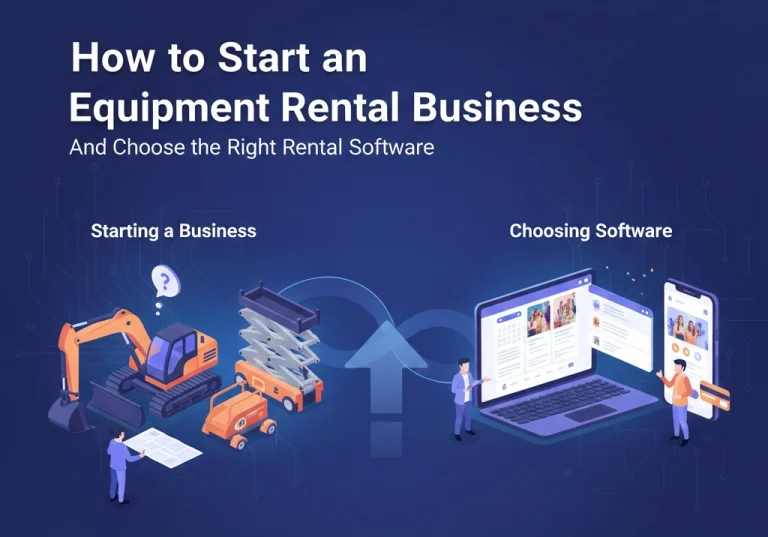
Starting an equipment rental company is one of those ideas that sounds simple at first. Buy some gear, put up a website, start taking bookings. In reality, learning how to start equipment rental business the right way is more about the systems you set up than the machines you buy. If you get the foundations, processes, and equipment rental business software right, everything else becomes much easier to scale.
Get clear on what you want to rent
Before spending on machines, pause and look at demand in your area. Talk to contractors, event planners, photographers, or small businesses and ask what they struggle to find locally. Many successful owners did this long before they bought their first unit, and it helped them avoid stocking the wrong things.
If you are starting an equipment rental business on a smaller budget, it usually works better to become known for one or two categories instead of trying to be everything for everyone from day one. That might be mini excavators and skid steers, sound and lighting kits, or party tents and furniture. Once you see good utilization, you can reinvest profits into more specialized gear.
Put a simple plan on paper
You do not need a 50 page business plan, but you do need a realistic one. List your startup costs, expected rental rates, and how many rentals you need each month just to cover your basics like rent, debt, payroll, and insurance. Many first time owners skip this step and only discover their rates are too low after a busy season that still felt tight on cash.
For a small equipment rental business, it is worth thinking in scenarios. What happens if you hit only 60 percent of your target rentals for the first six months. What if you have to replace or repair a major piece earlier than planned. Writing this down now will influence the equipment you choose, your pricing, and how fast you try to grow.
Sort out licences, insurance, and basic risk
This part is not exciting, but it will save you a lot of headaches. In most places you will need a registered business, tax number, and the right local permits. On top of that, you need proper insurance for your yard, vehicles, and the equipment itself, plus clear rental agreements that cover damage and loss.
If you skip this and rely on handshake deals, it feels fine until the first serious incident. At that point, not having professional paperwork and processes can become a very expensive mistake. Take a few hours early on to get advice from an accountant and a lawyer who understand rentals in your region.
Buy equipment with the numbers in mind
When you first walk through a dealer yard, it is easy to fall in love with big, impressive machines. The better question is which units will rent frequently, be easy to maintain, and hold their value. The most profitable fleets are built around what customers actually book, not just what looks good on a brochure.
Start by listing each item with its purchase price, expected daily or weekly rate, and how many rental days it needs to pay itself off. That simple calculation alone will stop a lot of impulse buys. Capture photos, serial numbers, and specs as soon as you buy something so you can drop that straight into your website and software for equipment rental companies later.
Decide on pricing and day to day routines
Pricing is not just about copying the competition. It has to work for your costs, your risk, and your market. Many owners use daily, weekend, weekly, and monthly rates, then add delivery, cleaning, and damage protection on top. Test a structure, watch how customers respond, and be ready to adjust if you see constant pushback or very high utilization on one type of item.
At the same time, write down the basics of how things will run. Who checks items out and back in. How do you record damage. When do you do preventative maintenance. Having a routine before things get busy means every shift knows what good looks like, instead of making it up on the spot.
Bring in rental software sooner than later
A lot of new owners start in spreadsheets and whiteboards, then promise themselves they will move to proper systems later. In practice, the move usually happens right after the first painful double booking or a week spent fixing billing mistakes by hand. That is why more operators are now setting up equipment rental software much earlier than they used to.
Good software for equipment rental companies gives you a live view of what is available, what is out, what is in maintenance, and what is overdue. It handles quotes, contracts, invoices, and payments from the same place, and it keeps a full history for every asset. A platform like integraRental is built for this job. It lets you manage inventory, reservations, maintenance, and billing in one system, instead of juggling a mix of sheets and tools that never quite match up.
Make your website and software work together
When people search online for rentals in your area, you want them to see real photos, clear categories, and simple ways to get a quote or book. Many renters now expect to browse availability and pricing without having to call for every small question.
This is where the right equipment rental business software starts to feel like another staff member. When your catalog, availability, and pricing all live in one place, your website can pull from that instead of being updated by hand. Over time, tools like integraRental can also plug into your accounting and payment systems so your team is not typing the same numbers into three different platforms every day.
Use data to decide what to do next
Once your business has a few months of history, the real advantage of software shows up in the reports. You will start to see which items always go out first, which sit on the shelf, which customers come back again and again, and which days or seasons are consistently busy.
That information is what turns guessing into planning. You can raise or lower rates with confidence, phase out lines that are just taking up space, and decide whether it makes sense to open another yard or add a delivery truck. Over time, owners who lean on these numbers tend to grow more steadily and with fewer surprises.
Frequently Asked Questions
How long does it usually take to get an equipment rental business off the ground?
Most new operators spend a few months planning, buying initial stock, and setting up systems before they start taking bookings. After launch, it can take another season or two before patterns and reliable profits settle in.
Can I start very small and still justify rental software?
Yes. Even a tiny fleet can benefit from a basic system if you plan to grow. It saves you from rebuilding everything later and reduces early mistakes like double bookings or missed invoices that are common with manual tracking.
What is the biggest mistake new owners make with pricing?
Many undercharge to win early business and then struggle to raise prices later. It is better to set rates that reflect your true costs and value, then use service, reliability, and convenience to stand out.
How soon should I think about adding delivery and pickup services?
If your customers are contractors, event planners, or busy businesses, delivery can be a major selling point. Start once you can handle it reliably, because poor delivery can damage your reputation faster than not offering it at all.
When does it make sense to move from spreadsheets to a platform like integraRental?
The moment more than one person is taking bookings or handling returns, or when you find yourself checking multiple places to see what is available, you are likely past the point where spreadsheets are safe. At that stage, a focused rental platform gives you control and peace of mind that manual tools cannot match.