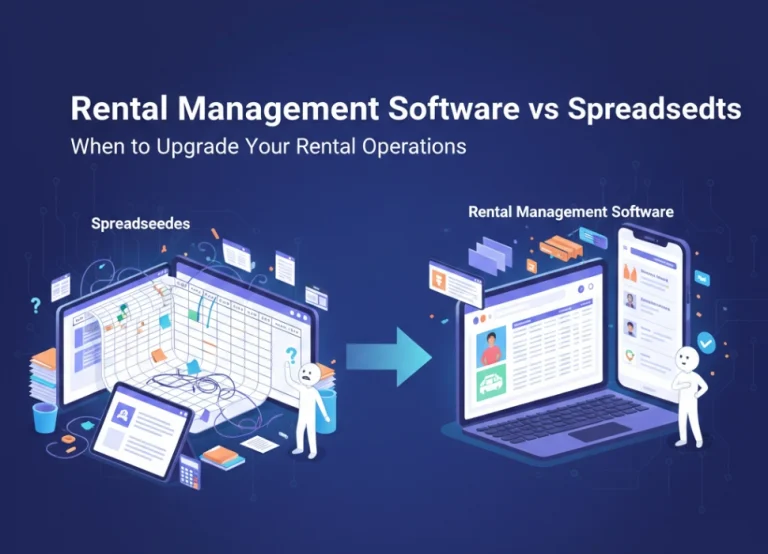
Rental operations often start in spreadsheets because they are cheap, flexible, and familiar. Over time, that same setup quietly limits growth, accuracy, and customer experience; this is where rental management software becomes the smarter choice.
Why spreadsheets work…until they don’t
Spreadsheets are a natural first step for a small rental business.
- They are essentially free and available on every computer, which keeps startup costs low.
- You can design your own columns and formulas to track bookings, due dates, and basic finances.
- For a handful of items and a short customer list, updates stay manageable and mistakes are rare.
The problem is that complexity grows faster than your spreadsheet can handle. As more colleagues edit files, versions multiply, and manual updates become a daily burden.
The hidden risks of spreadsheet run rental operations
Once you manage more equipment, locations, and staff, spreadsheets start to introduce real risk.
- Manual data entry is error prone; studies of spreadsheet driven operations show very high error rates once data volumes grow.
- Real time status is almost impossible; a sheet can be out of date the moment a phone booking comes in or a return is delayed.
- There is no built in audit trail, so you cannot easily see who changed what when a mistake appears.
For rental teams, this shows up as overbookings, double booked items, and sending out equipment that is actually damaged or missing because status was never updated correctly.
What purpose built rental management software does differently
Modern rental management software is designed around inventory, reservations, and lifecycle tracking not just cells in a grid.
- It acts as a centralized software to keep track of inventory, updating item availability automatically when orders are created, extended, or returned.
- Real time software asset trackinglets you see where each item is, who has it, when it is due back, and its maintenance history.
- Workflows like quotes, contracts, dispatch, checkin/checkout, and billing are built in, reducing repetitive admin work by a large margin.
Many platforms add barcode, QR, GPS, or RFID options so that scanning an item instantly updates its status, location, and usage history without anyone re typing data into a cell.
Clear signals it is time to upgrade
There is no single magic number, but several patterns reliably indicate you have outgrown spreadsheets and need dedicated rental business software.
- You have experienced double bookings or promised equipment that turned out to be unavailable once the yard was checked manually.
- Staff spend hours reconciling bookings, inventory, and invoices across multiple sheets and email threads each week.
- You cannot easily answer simple questions like “What is available next Tuesday?” or “Which assets are under utilized this quarter?” without building ad hoc reports.
- You manage multiple locations, product lines, or a mix of rentals and sales, and the spreadsheet logic needed to keep everything aligned is getting fragile.
If any of these feel familiar, the cost of staying on spreadsheets lost time, errors, and missed revenue usually outweighs the subscription cost of software. Market data shows rental software adoption rising globally as operators digitize and seek better visibility across fleets and locations.
Operational gains from switching to rental management software
The move from spreadsheet chaos to a unified rental management software platform typically pays off in a few core areas.
Inventory accuracy and availability
- Real time availability views reduce double bookings and prevent promising equipment that is already committed.
- Centralized software to keep track of inventoryshows what is in stock, where it is, and when it will be free again, across stores and warehouses.
Utilization and asset lifespan
- Integrated software asset trackinghighlights which assets earn the most, which sit idle, and when maintenance is due, so you can retire or reinvest strategically.
- Automated maintenance reminders and service ticket tracking help reduce avoidable breakdowns and extend asset life.
Admin time and decision making
- Automated billing, reporting, and scheduling can cut routine administrative work dramatically compared with manual spreadsheets.
- Dashboards and reports turn raw data into insightstop items, seasonal patterns, and profitability by product or customer segment.
For a growing rental company, these improvements translate directly into higher utilization, fewer headaches for staff, and a smoother customer experience.
Choosing software that fits your rental business
Not every system suits every operation, so treat rental business software as an infrastructure choice, not just a tool.
- Look for rental specific features: availability calendars, check in/check out workflows, damage tracking, and rate structures that match your daily, weekly, or monthly pricing.
- Make sure integrations cover your accounting stack and payment methods so that invoices, tax, and revenue data do not need manual re entry.
- If you operate in multiple regions, check that the platform can support your tax rules, currencies, and languages as you grow.
Think of spreadsheets as a sketchbook and rental software as the operating system of your business. Once inventory, locations, and staff reach a certain scale, the operating system becomes essential to keep everything aligned.
integraRental brings all the moving parts of a rental operation into one place, replacing scattered spreadsheets with a single system for bookings, dispatch, returns, and accounting. As a purpose built rental management software platform, it acts as reliable software to keep track of inventory, so teams can see which assets are available, on rent, in maintenance, or overdue at any moment. With integrated software asset tracking, barcode and mobile workflows, and support for multi location fleets, integraRental helps reduce double bookings, improve utilization, and give every team member the same real time view of the business.